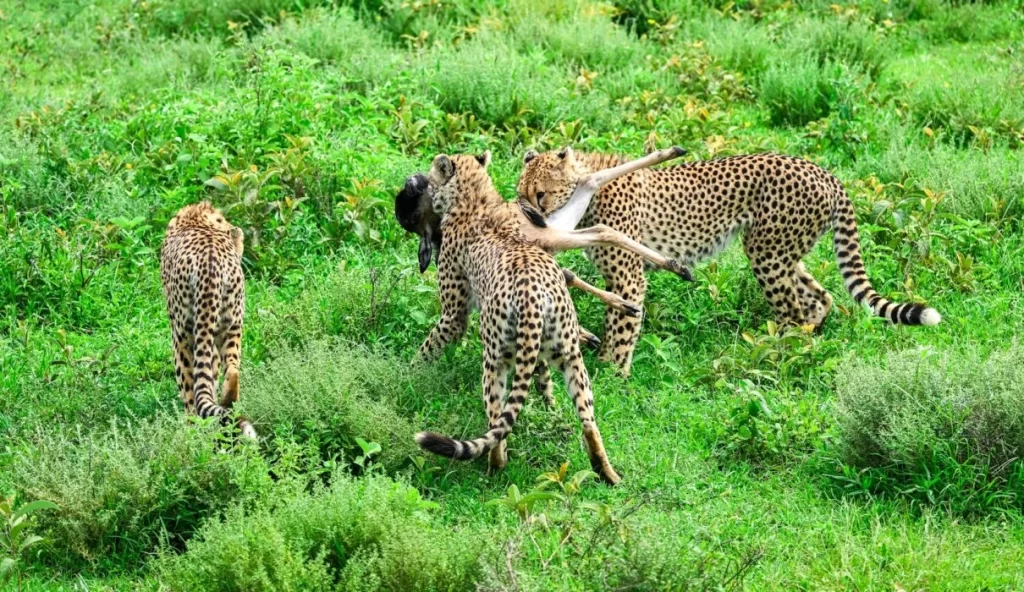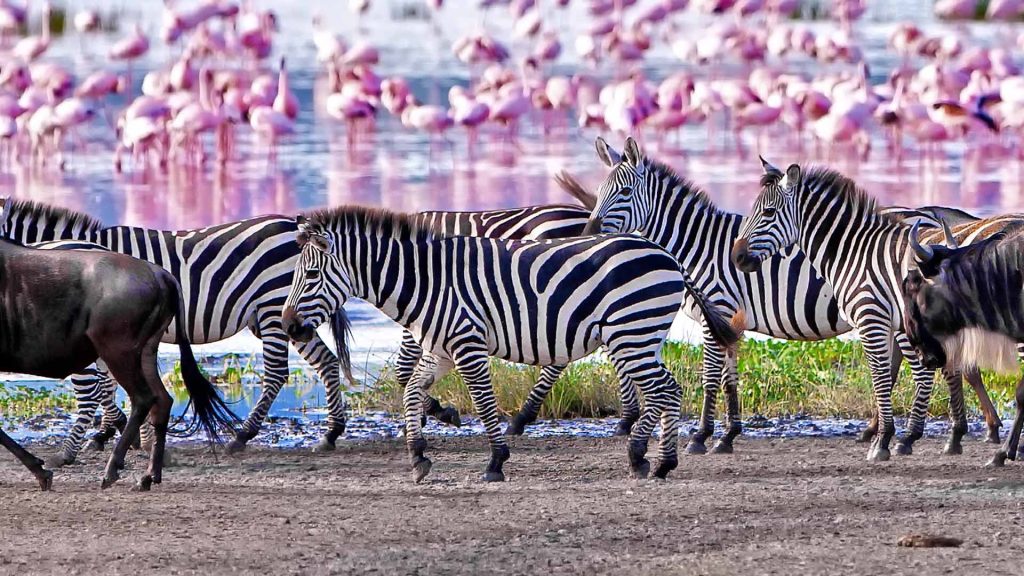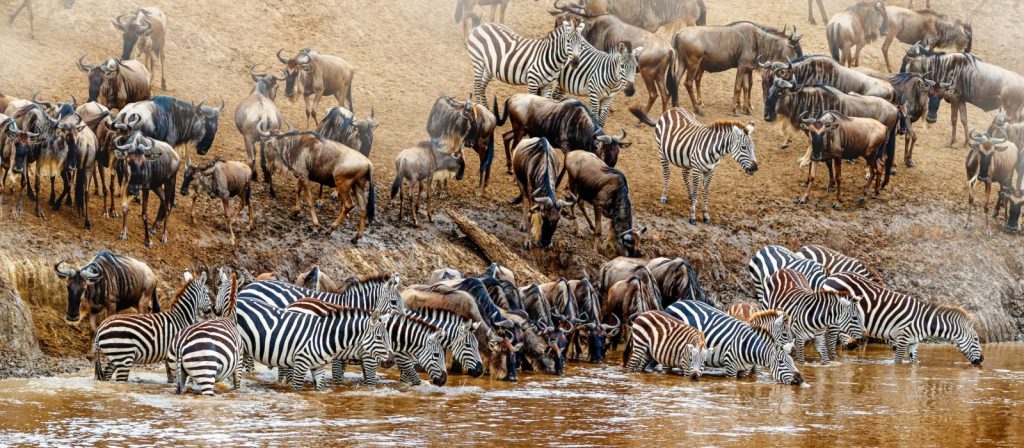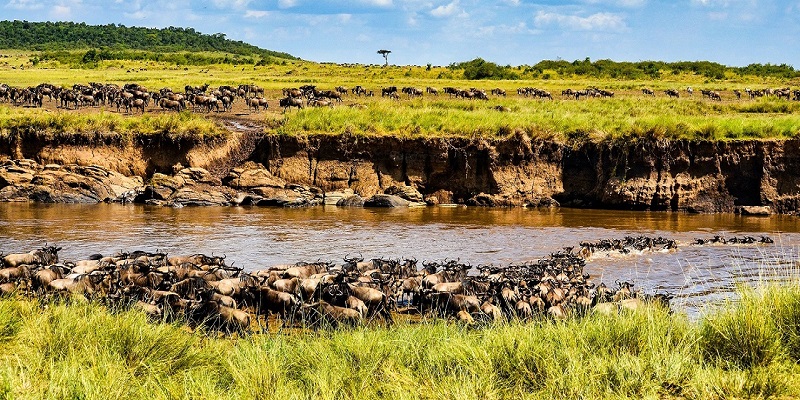
Serengeti National Park is one of Africa’s most legendary safari destinations and a UNESCO World Heritage Site. Spanning over 14,000 square kilometers, the Serengeti is renowned for its breathtaking landscapes, diverse wildlife, and the world-famous Great Migration—one of nature’s most extraordinary spectacles. Each year, millions of wildebeests, zebras, and gazelles move across the plains in search of fresh grazing, followed closely by predators such as lions, cheetahs, and hyenas. This timeless migration cycle is what gives the Serengeti its name, derived from the Maasai word “Siringit,” meaning “endless plains.”
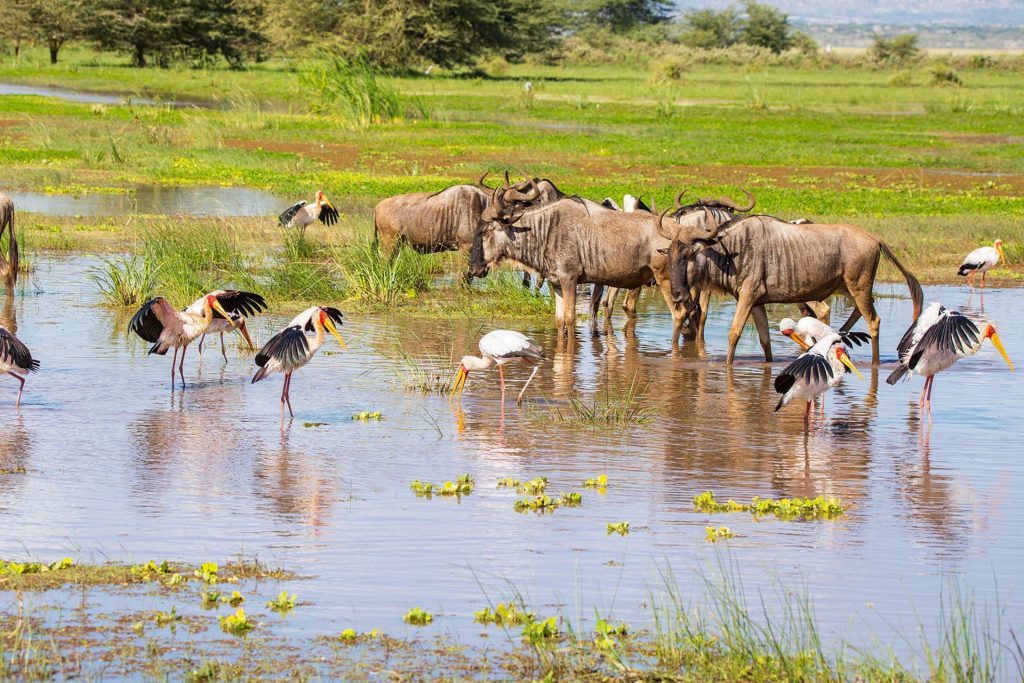
The park’s ecosystem is a masterpiece of natural balance, encompassing open grasslands, acacia woodlands, and riverine forests that support an incredible diversity of species. Visitors can expect to encounter all members of the “Big Five”—lion, leopard, elephant, buffalo, and rhino—as well as over 500 species of birds. The Serengeti’s sheer scale and abundance of wildlife make it one of the best places on Earth for game viewing and photography.
Beyond its wildlife, the Serengeti holds deep cultural and ecological significance. It forms part of the larger Serengeti-Mara ecosystem, which extends into Kenya’s Maasai Mara, and plays a crucial role in the survival of numerous migratory species. The park is also home to the Maasai people, whose traditional lifestyle coexists with the surrounding wilderness, adding a rich cultural dimension to the safari experience.
Whether you’re witnessing the dramatic river crossings of the Great Migration, exploring the vast plains on a hot air balloon safari, or relaxing in a luxury lodge under the stars, Serengeti National Park offers a once-in-a-lifetime adventure that captures the very essence of wild Africa.